

Data Repatriation Explained:
Why Organizations Are Repatriating
Data from the Cloud
For years, public cloud adoption has been treated as the default path for modern organizations. Speed, scalability, and reduced infrastructure overhead made cloud platforms an attractive option for teams looking to move fast and simplify operations. Over time, however, many organizations have discovered that where data resides has long-term implications for cost control, security posture, performance, and compliance.
As cloud adoption matures, a growing number of organizations are taking a more deliberate approach to data placement. Rather than assuming all workloads belong in the public cloud, they are reassessing which environments best support their business objectives. This shift has brought increased attention to data repatriation. By repatriating data, organizations can regain balance and control by placing data and workloads where they deliver the most value.
Understanding how data repatriation works and when it makes sense can help organizations build a more resilient and sustainable IT strategy.
What Is Data Repatriation?
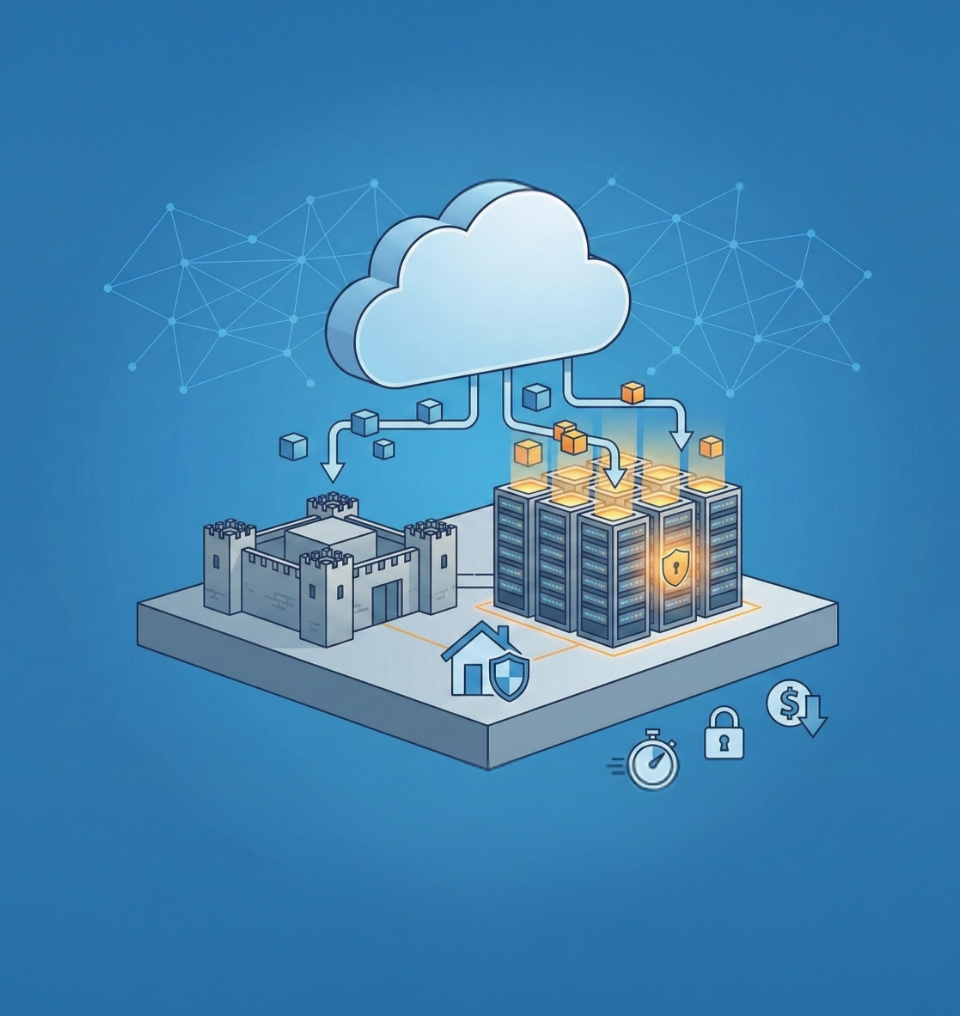
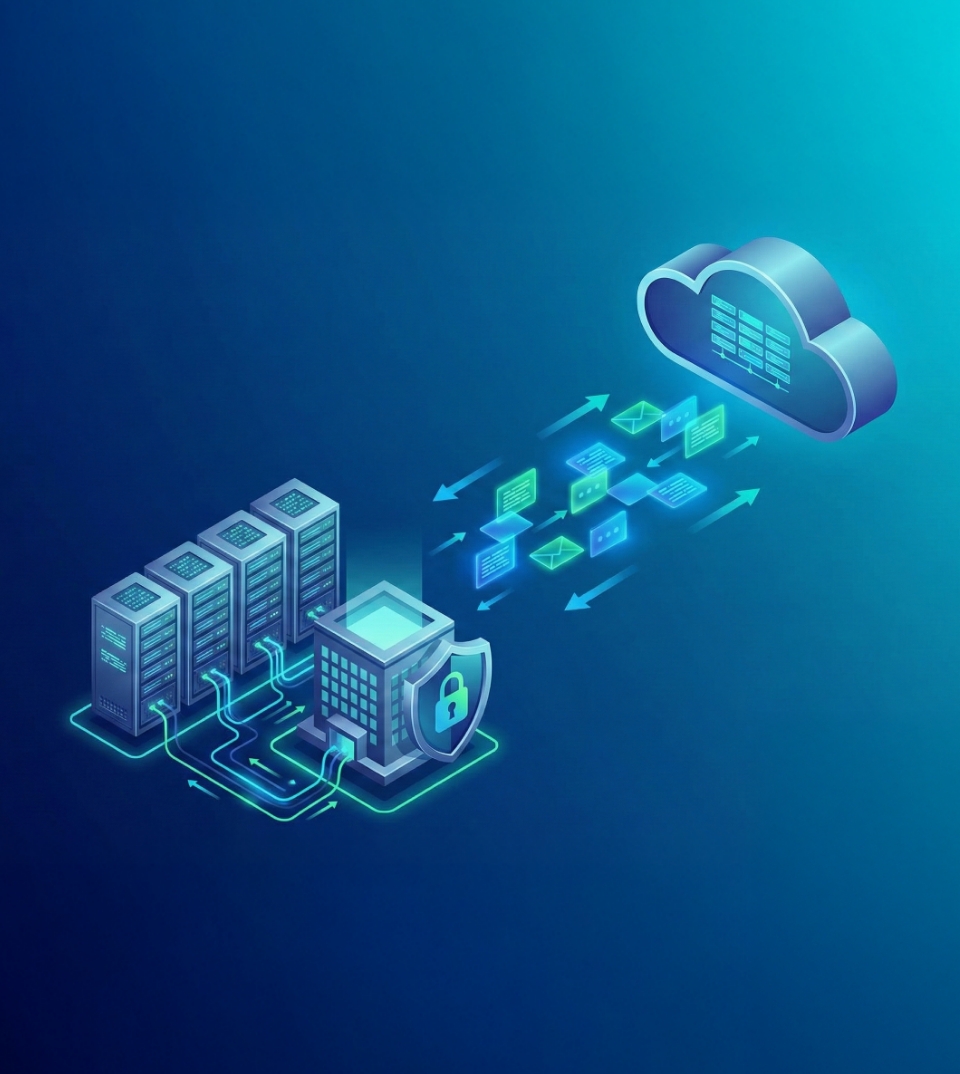
Data repatriation refers to the process of moving data and applications from public cloud environments back to infrastructure owned or directly controlled by the organization, such as private cloud platforms, on-premises data centers, or co-location facilities. In many cases, repatriation is selective, involving only certain datasets or workloads rather than a full exit from the public cloud.
Unlike early cloud migrations that prioritized speed and consolidation, data repatriation is typically driven by experience. Organizations that have operated in the cloud long enough to understand usage patterns, costs, and performance trade-offs are better positioned to make informed decisions about where specific workloads should reside.
Importantly, data repatriation does not signal a rejection of cloud technology. Most organizations that repatriate data adopt a hybrid model, keeping some workloads in public cloud environments while relocating others to private infrastructure that offers greater predictability and control.
Data Repatriation Example
Consider a mid-sized enterprise that migrated the majority of its data and applications to the public cloud several years ago. Initially, the move delivered faster deployments and reduced the need for internal infrastructure management. But eventually, challenges began to surface.
Monthly cloud costs became increasingly difficult to forecast as data volumes grew and egress fees accumulated. Compliance requirements expanded, placing greater scrutiny of where sensitive information was stored and how it was accessed. Performance issues emerged for analytics workloads that required consistent throughput and low latency.
After conducting a detailed assessment, the organization decided to repatriate its core data platforms and analytics systems to a private cloud environment while keeping customer-facing applications in the public cloud. Following the transition, the company gained clearer cost visibility, improved performance for critical workloads, and greater confidence in meeting regulatory obligations.
Why Organizations Are Repatriating Their Data
Organizations are not repatriating data for a single reason. In many cases, the decision is driven by a combination of financial, operational, regulatory, and technical factors that become more visible as cloud usage matures.
Here are the most common reasons organizations reassess where their data and workloads reside.
Cost Predictability & Long-Term Financial Control
Public cloud environments can deliver strong value early on, particularly for teams looking to move quickly without upfront infrastructure investment. In the long run, however, costs often become harder to forecast as data volumes grow and usage patterns evolve. Charges tied to storage expansion, sustained compute usage, and especially data movement can introduce volatility into IT budgets.
As organizations mature, this unpredictability can make long-term planning more difficult, particularly for finance and operations teams that need consistent cost models. Repatriating select workloads allows organizations to regain clearer financial visibility, shift toward more stable spending patterns, and better align infrastructure investments with actual business demand rather than fluctuating consumption metrics.

Greater Security Visibility & Governance
As data environments grow more complex, maintaining clear oversight of who can access data and how it is protected becomes increasingly important. In public cloud environments, shared security responsibilities can complicate governance and accountability across teams.
Hosting sensitive data within infrastructure directly managed by the organization provides deeper visibility into access controls, monitoring, and security policies. Such a shift can strengthen internal governance, provide clearer audit trails, and ensure more consistent enforcement of security standards, particularly for organizations managing proprietary, financial, health, or other high-risk data.
Data Sovereignty & Regulatory Requirements
Many industries operate under regulations that dictate where data must be stored, how long it must be retained, and how access is logged and reported. These requirements continue to expand across regions and sectors, increasing the complexity of compliance management.
Repatriating certain datasets allows organizations to keep regulated information within well-defined environments where controls are easier to document and demonstrate. This process can reduce the operational burden of compliance, simplify audits, and lower the risk of regulatory findings tied to data location or access practices.
Performance Consistency for Critical Workloads
Not all workloads perform equally well in shared, multi-tenant cloud environments. Applications that rely on predictable latency, sustained throughput, or continuous processing can experience variability that impacts user experience or downstream systems.
By relocating these workloads to dedicated infrastructure, organizations gain greater consistency and control over performance. This is particularly important for analytics platforms, data processing pipelines, and operational systems where performance stability directly impacts business outcomes.
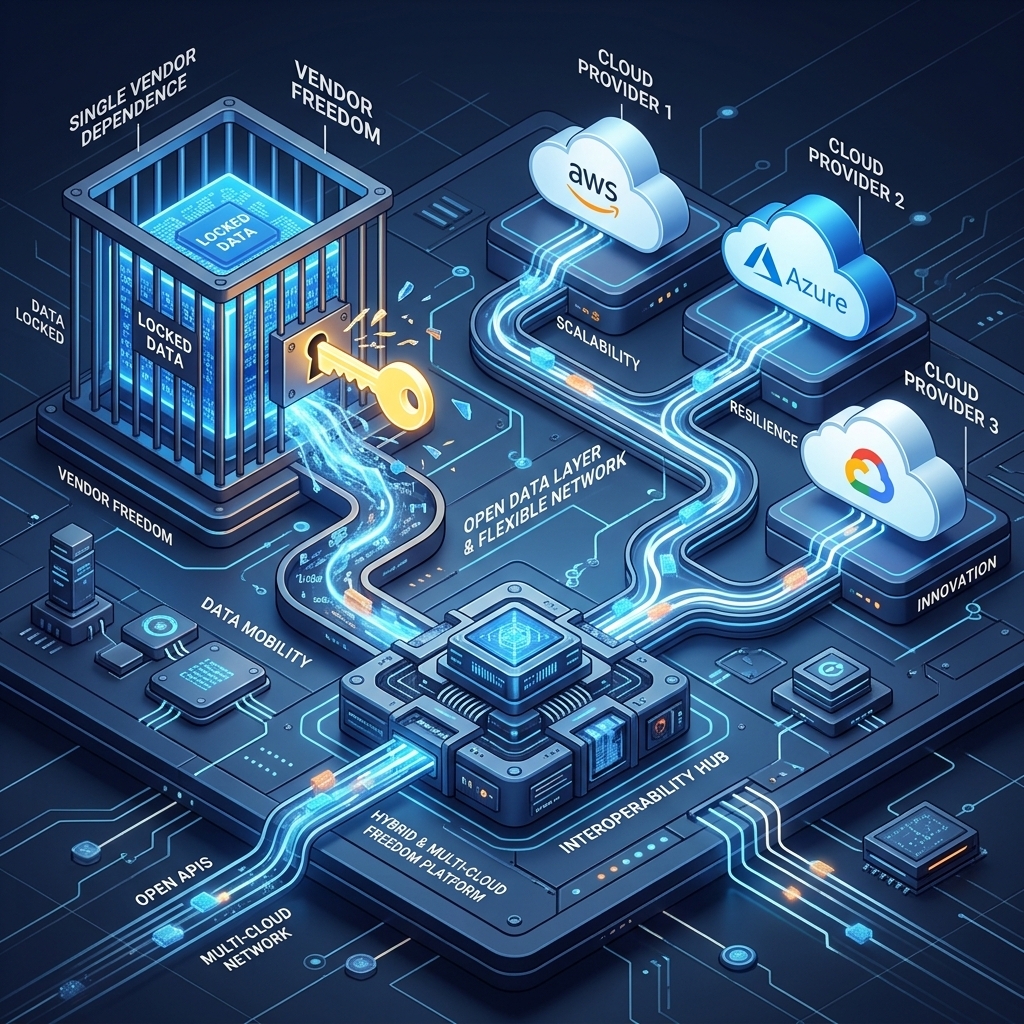
Reduced Vendor Dependence & Increased Flexibility
As organizations deepen their use of public cloud platforms, they may become increasingly tied to provider-specific services, tools, and architectures. Such dependency can limit flexibility and make future changes more complex or costly.
Data repatriation helps rebalance this relationship by giving organizations more control over their infrastructure choices. With greater independence, teams can adapt their environments as business needs evolve, adopt new technologies more freely, and avoid being constrained by a single vendor’s roadmap or pricing structure.
Common Approaches to Data Repatriation
Organizations take different paths when repatriating data, depending on workload requirements, risk tolerance, and long-term strategy. They choose the model that best aligns with how their data is used and what level of control is required.
Private Cloud Deployment
Private cloud environments offer cloud-style capabilities within infrastructure that is dedicated to a single organization. This approach is often chosen for sensitive data, regulated workloads, or systems that require predictable performance.
Private cloud deployments provide greater visibility into infrastructure behavior and security controls while still supporting automation and scalability. They are well-suited for organizations that want cloud functionality without the variability or shared-responsibility complexity of public platforms.
On-Premises Infrastructure
On-premises infrastructure remains a viable option for organizations that require maximum control over data, performance, and customization. It is often favored for mission-critical systems, proprietary platforms, or workloads with strict latency or compliance requirements.
Some organizations pair on-premises deployments with co-location facilities to gain physical infrastructure control without managing their own data centers. This approach offers stability and direct oversight while still supporting integration with both private and public cloud environments.
Hybrid Model
The hybrid approach is the most common form of data repatriation. Organizations retain public cloud services for workloads that benefit from elasticity, global access, or rapid scaling, such as customer-facing applications or development environments. At the same time, more stable or data-intensive workloads are moved into private environments where costs and performance are easier to manage.
A hybrid model allows organizations to balance flexibility with control while avoiding unnecessary disruption to existing systems.
How Data Repatriation Works
While every organization’s environment is different, successful data repatriation typically follows a structured, phased process. Approaching repatriation methodically helps reduce risk, control costs, and align technical decisions with business goals.
Assessment & Discovery
The process begins with a detailed review of current cloud usage. Organizations evaluate workloads, data volumes, performance requirements, dependencies, and ongoing costs. This phase helps identify which data and applications are good candidates for repatriation and which are better suited to remain in the public cloud.
Scope Definition & Strategic Planning
Once opportunities are identified, teams define the scope of the repatriation effort, including clear objectives, success criteria, and timelines. Decisions are made about where repatriated workloads will live, such as private cloud, on-premises infrastructure, or a co-location environment, and how these systems will integrate with existing cloud services.
Infrastructure Readiness & Capacity Planning
Before migration begins, the target environment must be evaluated for readiness. Organizations assess whether existing infrastructure can support the incoming workloads or required upgrades. Capacity planning, networking considerations, and security architecture are addressed during this phase to avoid surprises later in the process.
Risk Management & Migration Planning
Potential risks such as data loss, downtime, and security exposure are identified and mitigated through careful planning. Migration strategies are selected based on workload criticality, often using phased or parallel approaches to minimize disruption to business operations.
Data & Application Migration
During this phase, data and applications are transferred to the new environment. Applications may need to be reconfigured or adjusted to perform effectively outside the public cloud. Migration activities are closely monitored to maintain stability and data integrity.
Testing, Validation, & Optimization
After migration, systems are tested to confirm performance, availability, and security expectations are being met. Fine-tuning and optimization follow, allowing teams to adjust configurations, improve efficiency, and validate that the repatriated environment is delivering the intended outcomes.
Benefits of Data Repatriation
When approached strategically, data repatriation delivers benefits that extend beyond immediate cost or performance improvements. It gives organizations greater clarity, stability, and control over how their data supports business operations and long-term growth.
Improved Cost Transparency & Predictability
One of the most immediate benefits organizations experience after repatriating data is clearer cost visibility. Instead of variable monthly charges driven by consumption metrics, infrastructure costs become more stable and easier to model over time.
This predictability supports better financial planning and allows IT leaders to work more closely with finance teams on long-term budgeting. Organizations can make infrastructure investments based on expected usage rather than reacting to fluctuating cloud invoices, which is particularly valuable for data-heavy or always-on workloads.
Stronger Security Posture & Governance
Repatriating data brings security controls closer to the organization. Teams gain direct oversight of access management, monitoring, and policy enforcement without relying on shared responsibility models that can introduce ambiguity. Tighter control improves governance and reduces exposure to misconfigurations or unauthorized access. It also supports more consistent application of internal security standards across environments, especially for sensitive or proprietary data.
Simplified Compliance & Audit Readiness
For organizations operating under regulatory frameworks, data repatriation can significantly reduce compliance complexity. Housing regulated data in defined environments makes it easier to document controls, monitor access, and demonstrate adherence during audits. Audit preparation becomes less resource-intensive when data residency and security practices are centralized and clearly understood.
This benefit is particularly important for industries facing frequent or rigorous regulatory reviews.
Consistent Performance for Data-Intensive Workloads
Dedicated infrastructure allows organizations to tailor performance characteristics to specific workloads. Analytics platforms, data processing pipelines, and operational systems often benefit from predictable throughput and reduced latency.
By removing competition for shared resources, repatriated environments provide more stable performance profiles. The added consistency improves user experiences and reliable downstream processes.
Greater Operational Control & Availability
Managing infrastructure directly gives organizations more influence over availability, maintenance schedules, and system behavior. Teams can align operational decisions with business priorities rather than external provider constraints. This level of control can improve resilience by allowing customized redundancy, backup, and recovery strategies that match organizational risk tolerance and service expectations.
Reduced Vendor Lock-In & Increased Strategic Flexibility
Data repatriation helps organizations avoid becoming overly dependent on a single cloud provider’s ecosystem. By retaining ownership of core data platforms, teams maintain the freedom to integrate new technologies or adjust their architecture as needs change. This flexibility supports long-term agility and positions organizations to respond more effectively to market shifts, regulatory changes, or evolving business models.
Challenges in the Data Repatriation Process & How to Address Them
While data repatriation offers meaningful benefits, it also introduces challenges that require careful planning and execution. Organizations that approach these challenges proactively are better positioned to complete repatriation efforts with minimal disruption and long-term success.
Protecting Data Integrity & Security During Migration
One of the most significant concerns during repatriation is maintaining the accuracy, completeness, and security of data as it moves between environments. Large data transfers increase the risk of corruption, loss, or unauthorized access if not handled correctly.
This challenge is addressed through strong encryption, clearly defined access controls, regular backups, and validation processes that confirm data accuracy before and after migration. Conducting migrations in controlled stages rather than a single large transfer further reduces risk.
Minimizing Downtime & Business Disruption
Repatriation projects can affect business operations if systems are unavailable during migration. For organizations running mission-critical applications, even brief outages can have downstream consequences.
Downtime risk is reduced through phased migrations, parallel environments, and comprehensive testing. Many organizations migrate non-critical workloads first, allowing teams to refine processes before transitioning core systems.
Managing Upfront Costs & Infrastructure Investments
Although repatriation can improve long-term cost stability, initial expenses related to infrastructure upgrades, migration tooling, and professional services can be substantial. Without careful planning, these costs may offset anticipated benefits.
Developing a clear financial model and phased investment plan helps organizations manage upfront spending. Aligning repatriation efforts with broader infrastructure refresh cycles can also improve cost efficiency.
Addressing Skills Gaps & Operational Changes
Moving workloads back under direct control often shifts responsibilities to internal teams. Organizations may encounter skills gaps related to infrastructure management, security operations, or platform maintenance.
Skill gaps can be addressed through training, updated operational processes, and, in some cases, external support. Clear role definitions and internal alignment also help teams adapt to new responsibilities.
Coordinating Stakeholders & Change Management
Data repatriation affects multiple stakeholders across IT, security, finance, and business leadership. Without alignment, priorities can conflict and slow progress.
Successful initiatives include early stakeholder involvement, transparent communication, and shared success metrics. Treating repatriation as an organizational initiative rather than a purely technical project improves coordination and outcomes.
Is Data Repatriation a Step Backward or a Strategic Reset?
A common misconception is that moving data out of the public cloud represents a retreat from modern technology or a reversal of digital progress. In practice, data repatriation more often signals a shift from experimentation to intentional design.
Early cloud adoption was largely driven by speed, convenience, and the desire to reduce infrastructure overhead. Organizations moved quickly to take advantage of scalable resources and managed services, sometimes without fully understanding how those choices would affect long-term cost structures, governance models, or performance requirements. As cloud usage matures, priorities tend to change. Leaders begin to evaluate technology decisions based on sustainability, predictability, and alignment with business outcomes rather than speed alone. Data repatriation fits into this evolution by allowing organizations to optimize where workloads live based on how they are actually used.
Rather than treating infrastructure decisions as permanent or one-directional, modern IT strategies emphasize flexibility and adaptability. Repatriation supports this mindset by enabling organizations to deliberately combine public cloud, private cloud, and on-premises environments into a cohesive architecture. Each environment plays a role, selected for the strengths it offers.
Viewed through this lens, data repatriation is less about going backward and more about refining an organization’s technology strategy. It reflects a deeper understanding of tradeoffs and a commitment to building an infrastructure foundation that can support growth, regulatory change, and emerging technologies over time.
When to Consider Repatriating Your Organizational Data: 5 Signs It’s Time
Organizations rarely arrive at data repatriation decisions suddenly. In most cases, a series of operational, financial, or strategic signals indicate that the current data model may no longer be the best fit. Recognizing these signs early allows teams to evaluate options before challenges escalate.
Cloud Costs Are Becoming Difficult to Predict or Control
One of the clearest indicators is rising cloud spend that no longer aligns with business growth or usage expectations. When monthly costs fluctuate significantly due to data storage expansion, sustained compute usage, or data transfer fees, long-term planning becomes more difficult. If teams are spending increasing amounts of time explaining cloud invoices rather than optimizing workloads, it may be time to reassess where core data platforms should reside.
Regulatory or Data Residency Requirements Are Increasing
As regulations evolve, organizations may face new requirements around where data must be stored and how access is governed. Meeting these obligations within public cloud environments can introduce added complexity, especially across regions or jurisdictions. Repatriating regulated datasets into clearly defined environments can simplify compliance management and reduce regulatory risk exposure.
Performance Issues Are Impacting Critical Systems
When latency, throughput, or consistency issues begin to affect analytics platforms, operational systems, or customer experiences, infrastructure placement deserves closer review. Not all workloads are well-suited for shared cloud environments. Dedicated infrastructure may provide the performance stability required for data-intensive or mission-critical applications.
Limited Visibility or Control Over Data & Infrastructure
As environments grow more complex, organizations may struggle to maintain clear insight into how data is accessed, protected, and managed. Limited visibility can complicate governance, security oversight, and internal accountability. Repatriation offers a way to regain direct control over data environments and align operational practices more closely with internal standards.
Growing Dependence on a Single Cloud Provider
Heavy reliance on provider-specific services and architectures can reduce flexibility over time. When future technology decisions feel constrained by existing cloud commitments, it may be worth reevaluating data placement. Repatriating core datasets can restore architectural freedom and support a more adaptable long-term strategy.
Data Repatriation FAQs
What Is Data Repatriation?
Data repatriation refers to the process of moving data and applications from public cloud environments back to infrastructure that an organization owns or directly controls. This process typically involves transferring workloads to private cloud platforms, on-premises data centers, or co-location facilities. The goal is to regain control over data and optimize performance, cost, and security.
What Is Cloud Repatriation?
Cloud repatriation is another term for data repatriation and refers to the process of moving data from public cloud environments to either private cloud infrastructure or on-premises systems. Organizations often repatriate data as part of a larger strategy to optimize costs, improve performance, and meet compliance or security requirements.
Why Are Organizations Repatriating Their Data?
Organizations are moving data back to on-premise systems for various reasons, including unpredictable costs, security concerns, regulatory compliance needs, and performance requirements. As cloud usage matures, businesses recognize the need for more control and visibility over their data environments. Repatriation allows for more predictable costs, greater security, and tailored performance for critical workloads.
How Does Data Repatriation Impact Costs?
One of the primary reasons organizations pursue data repatriation is to gain better control over their infrastructure costs. In public cloud environments, variable costs tied to data storage, transfer fees, and compute usage can be difficult to forecast. By moving some workloads to private infrastructure, businesses can achieve greater cost stability, allowing for more predictable budgeting and long-term financial planning.
Is Data Repatriation Only for Large Organizations?
No, data repatriation is not limited to large enterprises. While the process can be complex and resource-intensive, businesses of all sizes are recognizing the benefits of regaining control over critical data environments. Small and mid-sized organizations, in particular, may find that the cost predictability and enhanced security offered by repatriation are worth the initial investment in migration and infrastructure upgrades.
What Are the Risks of Data Repatriation?
While data repatriation offers numerous benefits, it also carries risks, including potential data loss during migration, business disruptions, and the need for specialized skills. However, these risks can be mitigated with careful planning, phased migrations, and robust testing protocols. Organizations should also account for the upfront costs of infrastructure upgrades and ensure they have the resources to manage the new environment effectively.
How Do I Know If Data Repatriation Is Right for My Organization?
If you’re facing rising cloud costs, regulatory compliance challenges, or performance issues with critical workloads, it may be time to consider data repatriation. Other indicators include limited visibility into your data, growing dependence on a single cloud provider, or the need for more predictable and secure environments for sensitive data. A thorough assessment of your current cloud usage and business needs is essential to determine if repatriation is the right solution.
By following these steps, organizations can streamline the migration process, minimize disruptions, and maximize the efficiency and effectiveness of their cloud migration efforts.
Create Your Data Repatriation Strategy with Meridian Group International
Data repatriation is ultimately about clarity. It gives organizations the opportunity to step back, evaluate how their data is truly being used, and make intentional decisions that support performance, compliance, budgets, and long-term growth.
For many teams, the challenge is not whether repatriation makes sense but how to approach it without introducing risk or disruption. That’s where we come in.
At Meridian Group International, we help organizations navigate these decisions with a practical, experience-driven approach. Whether your goal is to design a private cloud, rebalance a hybrid environment, or bring greater structure to data management, we work alongside your team to assess current environments and map a path forward that aligns with real operational needs.
Contact us today to learn how we can help repatriate your organizational data and regain control of your data.